



…a house is not a home until you love where you live…

Small Square Footage, Big Life: How to Design a Coral Gables Home That Feels Twice the Size
Coral Gables has a lot of charming small homes. And we mean a lot. There are 1920s and 1930s bungalows tucked under old oaks with the kind of character you just can’t replicate in new construction no matter your budget. It also has a lot of homeowners who love that charm and moved to the Gables specifically for that character. And yet, plenty of them wish their house was, ahem, bigger.
So, here’s the thing – square footage is a number. “Big” is a feeling, and you can design for the feeling without touching the number at all. If, you are restricted by it for any reason.
Where the Eye Goes Matters More Than Where the Walls Are
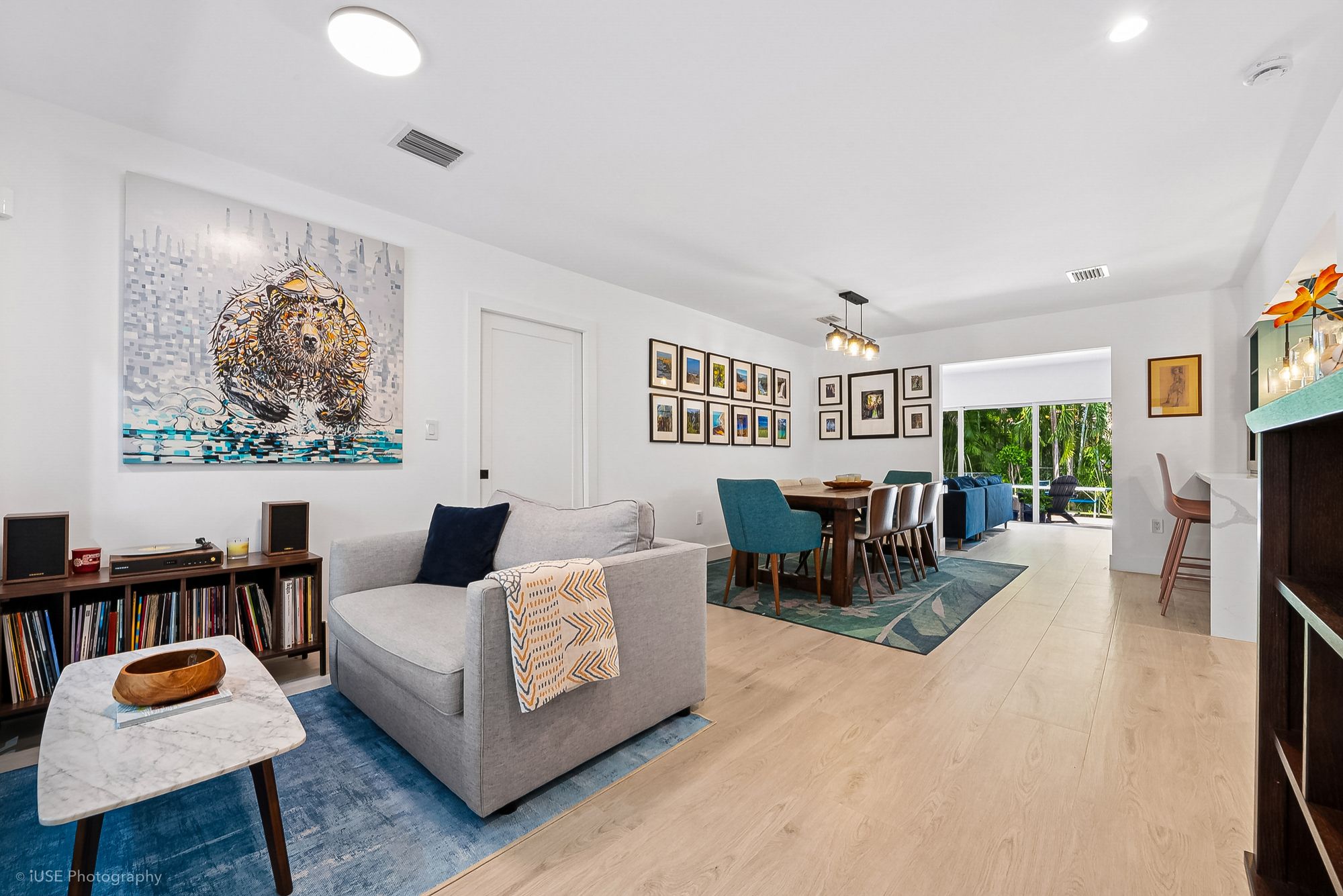
When looking to make a small home bigger, you’d be surprised the easiest solution isn’t adding space. It’s controlling sightlines. A clear view from the front door through the living area and out a window to the front or back yard makes a home feel like it keeps going, even when it doesn’t, well, not really. Pocket doors instead of swinging ones can keep that sightline open when you want it, and give you a real wall when you don’t, without eating up extra floor space.
The same principle applies to furniture placement. Instinct says push every piece against the wall to “maximize space.” In practice, floating a sofa or a console eighteen to twenty-four inches off the wall can create depth. It’s kinda like when a room feels smaller when its unfurnished and bigger once you put furnishings in it. Your eye reads the extra layers as more room, not less. It sounds counterintuitive until you see it in action.
The Ceiling Trick Nobody Budgets For
Vaulting or raising a ceiling, even in one room, does more for a small home’s sense of scale than almost any other single move, and it’s often more doable in an older Gables bungalow than people assume, especially since a lot of these homes have more usable attic space above the original roofline than a newer build would. And if a full vault isn’t feasible, installing floor-to-ceiling shelving or cabinetry can pull the eye upward and add storage without taking up floor space, which of course is even more valuable in a home where every square foot is prime real estate.
One Color, Head to Toe
This is the least expensive, and perhaps easiest change on this list, and the one most people tend to ignore because it feels almost too simple to work. Painting a room a single, consistent color, walls, trim, ceiling, all of it – all the same color can actually make a room seem larger by removing any so-called visual boundaries that can make a room read as “small.”An accent wall, on the other hand, actually does the opposite; it draws a hard line that tells your eye exactly where the room stops. And yet, most people tend to dive right on in to painting that one bold accent wall and go no further. Nope. It actually stunts the room rather than enlarges it. Extend the same color from baseboard to ceiling and that line will disappear and make the space look and feel so much bigger.
Furniture That Earns Its Keep
A small space and small furniture do not mix. We know it feels silly to say aloud. Heck, Pottery Barn even made a whole line of “apartment sized” furniture for a while to cater to smaller furniture. Spoiler alert: it didn’t last. It’s a common instinct to put smaller pieces into smaller spaces but, it backfires because undersized pieces make a room look even smaller rather than an intentionally scaled space, and you end up really feeling the tightness of the space rather than the cozy, comfort of a more filled out room that larger furniture can provide. One well-proportioned sectional with real storage built in does more work than three small chairs crowding the same footprint. Choose fewer, better, correctly scaled pieces, and let them multitask: a storage ottoman instead of a coffee table and a side table combined, a bench with a lift seat at the foot of the bed instead of a separate dresser. Have some fun with it.
Let the Outside Do Some of the Work
In a lot of the country, this list would stop at the walls. Here, it doesn’t have to, and we’ve made this case at length before in Why Indoor-Outdoor Living Is No Longer a Luxury in Miami. A covered terrace visible through the same sightline you’ve already opened up, with flooring that continues the same material and tone from inside out, reads as an extension of the room rather than a separate one. In a small Gables bungalow, a ten-foot Cantilever door onto a covered lanai can functionally double your living space on any evening the weather cooperates, which in SoFla is most of them.
Where Coral Gables Makes This Trickier (and More Fun)
If your home falls under Coral Gables’ design review through its Board of Architects, and a lot of the bungalows here do, the exterior facade is often something you’re preserving rather than expanding, which means most of the square-footage-feels-bigger work has to happen inside that existing shell. We’d argue that’s a feature, not a limitation. It forces a level of architectural discipline (nee expertise), on sightlines, materials, ceiling treatments, that a from-scratch new build doesn’t require, and the results tend to feel more considered because every decision had to earn its place.
If you’re sitting on a smaller home in Coral Gables, Pinecrest, or anywhere else in Miami-Dade and wondering whether it’s worth renovating rather than moving up in square footage, that’s a conversation we have with clients regularly.
FAQs
Do I need to add square footage to make a small home feel bigger?
No, and in a lot of cases we’d actively steer you away from it. Sightlines, ceiling height, consistent color, and correctly scaled furniture do more for how a home feels day to day than an addition would, and they cost meaningfully less than adding square footage.
Is it harder to renovate a small home in Coral Gables specifically?
It can involve more design review if your home falls under the Board of Architects’ jurisdiction, particularly for anything touching the exterior. That adds planning time but doesn’t limit what’s possible inside the existing envelope, which is where most of these changes happen anyway.
What’s the single most impactful change for making a room feel bigger?
Controlling sightlines. A clear visual path from one space through to the next, or out to a window, does more than almost any other single design decision, and it’s usually achievable without any structural change at all.
Will painting my whole house one color really make that much of a difference?
Honestly, yes, particularly in smaller rooms. Extending one consistent color from baseboard to ceiling removes the visual stopping points that make a room read as small. It’s one of the lowest-cost, highest-impact changes on this list.