



…a house is not a home until you love where you live…

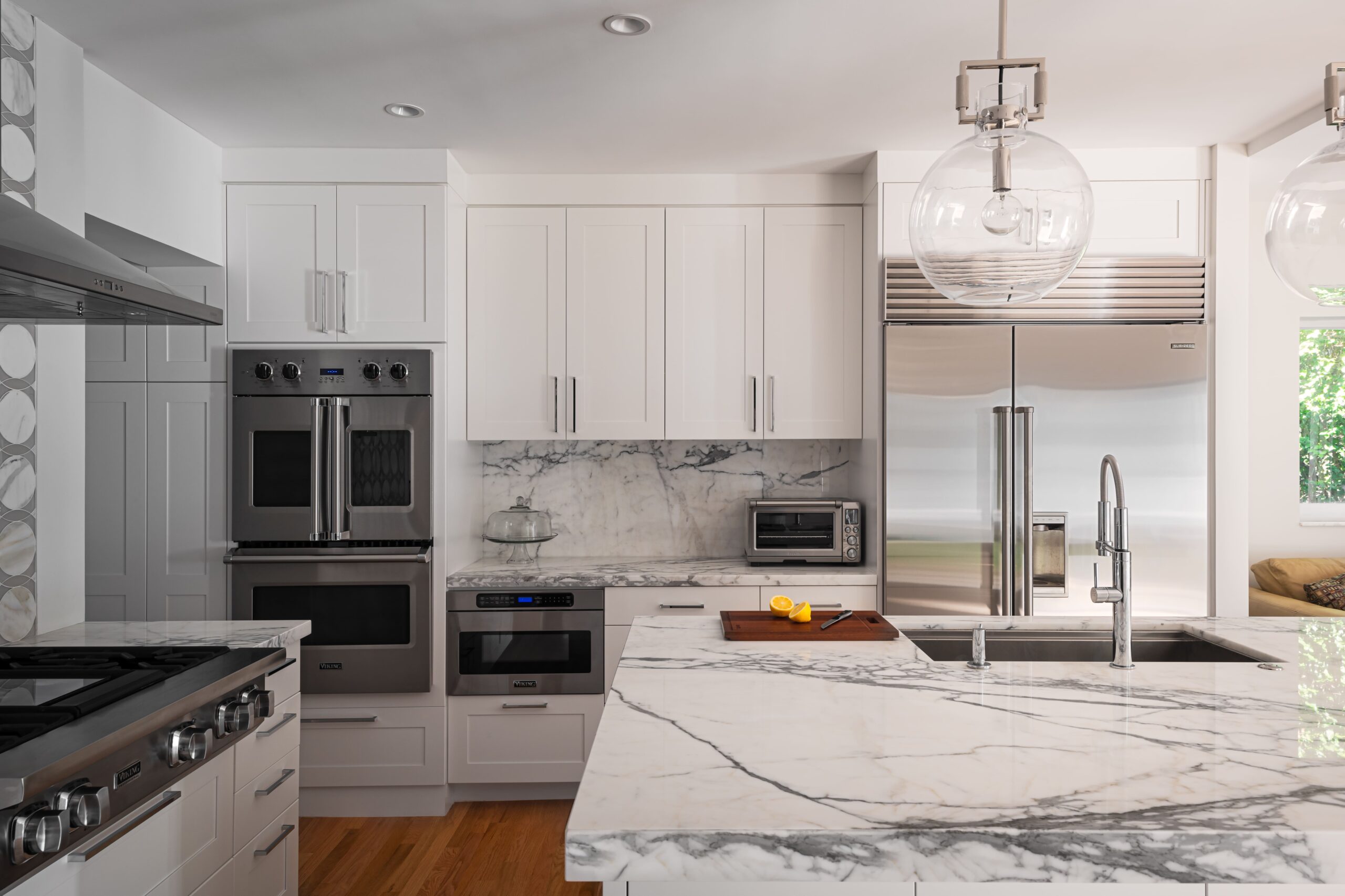
What a Miami Renovation Will Cost Today: An Honest Answer from an Architect Who’s Seen Every Variable
Somewhere around the third Google search at eleven at night, every homeowner looking to renovate their home is typing the same question into their search engine or AI app of choice: how much is this really going to cost me?
They’re not looking for a range pulled from a magazine article that cites a house built in Aspen or a contractor’s back-of-the-napkin guess delivered in the driveway. And neither are you. At Debowsky Design Group, we get it. We’ve talked to countless homeowners who are just looking for the real number, for their house, in their neighborhood, with their particular wish list that just so happens to include a waterfall island and a primary suite that comes with all the bells and whistles they’ve always wanted.
And here’s the uncomfortable truth we’ve learned after doing this for a long time: anyone who gives you that number in the first phone call is guessing, and probably guessing low, because a low number is easier to say out loud than a real one.
Yes, of course there are certain key numbers that we can all go off of – like certain average price per square foot ranges that you can expect. But the truth is, even in a city as small as Miami (and yes, Miami is pretty small in the grand scheme of things), that number can vary widely across its municipalities.
At Debowsky Design Group, we aren’t about just tossing out low numbers to make you feel good. Why? Well, because we would rather be honest and transparent with you upfront so that you know what you are getting into from the start. The last thing we ever want for our clients is to get hit with unexpected expenses in an already large budget, and high-stress endeavor.
So, we like to keep it real. So, today in this post we wanted to take a moment to walk through what moves the needle on a renovation budget in Miami-Dade, so that when you do sit down with an architect or a contractor, you’re asking better questions and reading their numbers with a sharper eye.
Why Nobody Can Give You an Exact Answer on Day One
A kitchen renovation in a 1970s Pinecrest ranch and a kitchen renovation in a 1990s Coral Gables home can carry wildly different price tags even if the square footage and finish level look identical on paper. The house itself is half the equation. What’s behind the walls, what the electrical panel can handle, whether the plumbing runs through a slab that needs to be cut open, whether the roofline allows for the vaulted ceiling you’ve been picturing. None of that shows up until someone qualified looks at the property.
That’s the part people find frustrating, and we understand why. You want a number. We want to give you a real one. Those two things are in tension until an architect has walked the site in person.
The Line Items That Move a Budget the Most
Of course, some cost drivers are predictable enough that we can talk about them honestly, even before we’ve seen your specific house or property.
Structural changes are the biggest lever in either direction. Moving a load-bearing wall, adding a second story, reconfiguring the roofline for higher ceilings: these require engineering, permitting, and labor that a cosmetic refresh simply doesn’t. If your renovation stays within the existing structural envelope, your budget can be more contained. The moment you start moving walls that hold something up, you’re going to come face to face with a more meaningfully different number.
Impact windows and doors are a South Florida-specific cost that catches a lot of newcomers off guard. Miami-Dade code requires impact-rated openings, and a renovation that touches the exterior of a home often triggers bringing existing windows into compliance even if that wasn’t part of the original plan. It’s a real cost that needs to be in the budget from the start rather than discovered mid-permit.
Material selection can swing a budget more than most people expect, and not always in the direction you’d guess. A porcelain slab that mimics marble can look nearly identical to the latter and cost a fraction as much to install and maintain. Meanwhile, a “budget-friendly” wood finish that isn’t rated for South Florida humidity often costs more over five years than the material everyone assumed was the splurge. There are plenty of ways to play within your budget and still select materials that not only look great but actually have a far longer lifespan against South Florida’s environment.
And of course, permitting in each municipality adds their own variables. Miami-Dade County, the City of Coral Gables, Pinecrest, and Palmetto Bay each run their own review process, and Coral Gables in particular layers on design review through its Board of Architects for anything touching the exterior. Now, that doesn’t necessarily raise your overall construction cost, but it definitely can impact your timeline, and timeline has a way of becoming a cost variable when temporary housing or storage stack up, on top of myriad other factors.
And finally, labor availability in South Florida’s construction market has tightened up over the past couple of years. Cutting to the chase – skilled trades familiar with coastal-grade materials and hurricane code aren’t interchangeable with just anyone with a good intention and a hammer. Good crews are worth the premium. Cutting corners tends to show up later as a callback, which – you guessed it – costs more than doing it right the first time.
The Budget Conversation That Saves You Money
Getting a spot-on quote for your project is going to take more than just a Google search. It’s going to take a real conversation. But it also is going to need to start with a conversation at home first.
That means, figuring out and deciding what is your budget and rather than asking how much is this renovation going to cost – but saying, this is how much I can allot to this project, so what can I get from it? Granted, that may not be the question you are asking and maybe you just want what you want and are looking for a number. That’s fine too – but even still, you gotta go back to point A and have an honest walkthrough with an architect and figure out the best laid path for your ultimate wish list.
The clients who get the best outcomes on sticking to their budgets are the ones who tell us their real number early, even when it feels uncomfortable to say out loud.
We understand the instinct to hold back. Maybe a lower stated budget gives you negotiating room. Maybe you’re worried about being judged for what you can or can’t spend. Maybe you genuinely don’t know yet and would rather wait for an estimate before committing to a figure. All of those instincts make sense, and yet, all of them can work against you.
When we know the real number, even a modest one, we can design toward it intelligently: sequencing phases, choosing where to spend and where to save, and avoiding the expensive experience of falling in love with a design that then gets value-engineered into something else entirely. We’ve worked with a wide range of budgets. The number doesn’t change the quality of the thinking that goes into a project. What changes the outcome is whether we’re designing with real information or working around a figure nobody’s said out loud yet.
Where an Architect Earns Back the Fee
It might seem counterintuitive that adding a professional fee to your project could lower your overall cost, but it happens more often than people expect. An architect who catches a structural issue before demolition, flags a permit trigger before the contractor is mid-project, or steers you away from a material that will fail in five years is saving you money you would have otherwise spent twice.
The projects that go over budget in dramatic, headline-worthy ways are almost never the ones where an architect was involved from the start and the budget conversation happened honestly. They’re the ones where scope crept, surprises surfaced after demo, or the design and the wallet were never quite talking to each other.
FAQ
How much does a kitchen renovation cost in Miami?
It depends heavily on scope, but a full kitchen renovation with quality, coastal-appropriate finishes in Miami-Dade typically runs higher per square foot than comparable projects in many other U.S. markets, largely due to hurricane compliance requirements and material costs suited to our climate. An architect can give you a realistic range once they’ve seen the specific scope and the home’s existing conditions.
Why won’t anyone give me a number over the phone?
Because an honest number depends on things that aren’t visible from a phone call: the condition of your electrical panel, whether plumbing needs to move through a slab, whether a wall is load-bearing, what your municipality’s permit requirements trigger. Any number given before an architect has seen the property is a guess, and usually an optimistic one.
Does hiring an architect really save money, or is it an added cost?
Both can be true, and usually the savings outweigh the fee. Architects catch structural, permitting, and material issues before they become expensive mid-construction surprises. On projects involving any structural change or permit-required work, the fee tends to pay for itself well before the project wraps.
Should I tell my architect my real budget, even if it feels low?
Yes, and it’s one of the most useful things you can do. A real number, even a modest one, lets us design intelligently toward it. A vague or inflated number tends to produce a design that gets painfully reworked once actual bids come in.