



…a house is not a home until you love where you live…

Top Aging-in-Place Upgrades That Don’t Look Clinical
When you’re doing a major renovation or building new, it’s important to remember that the finished product is supposed to be your forever home. After all, one of the biggest rewards of all this work is never having to even think about moving again.
But that’s only a possibility when your new home is designed for aging in place. Our needs change as we get older, and your new home should be able to accommodate these needs.
We know what you’re thinking: boring, right? Contrary to popular belief, a home that’s designed for aging in place is still extremely stylish – there are just some specific details that take a little more thought than they would otherwise.
To show you what we mean, we’ve put together this list of aging in place upgrades that don’t look clinical at all.
Zero-Entry Shower
The bathroom is the most hazardous space in the house for seniors, since it carries the highest risk of a fall. That risk is much higher if you have to step over a tub or a take a step up to get into the shower. This is why a key component of a home that’s designed for aging in place is a zero-entry shower, which eliminates any sort of barrier in this area and gives you a wider entrance.
As a bonus, zero-entry showers should be nice and big, and there’s nothing outwardly clinical about their appearance. Lots of people have bigger showers these days, and they can be designed with beautiful materials like natural stone (and even grab bars that match your aesthetic and not just hospital-chic).
Non-Slip Flooring
Another effective way to decrease the risk of a fall is installing non-slip flooring. Certain types of flooring offer more traction as well as higher water resistance, making them less slippery.
The good news is, these flooring options are available in all sorts of gorgeous designs and patterns. For instance, a great choice for the bathroom or kitchen might be mosaic tiles with matte finishes, or even classic pebble tile and its naturally textured surface.
Layered Lighting
There’s nothing clinical about layered lighting, which can be extremely helpful when your eyesight naturally diminishes with age. In large spaces, a combination of ambient, task, and accent lighting ensures there’s adequate lighting throughout the entire room. Layered lighting also increases your home’s perceived value and overall visual appeal.
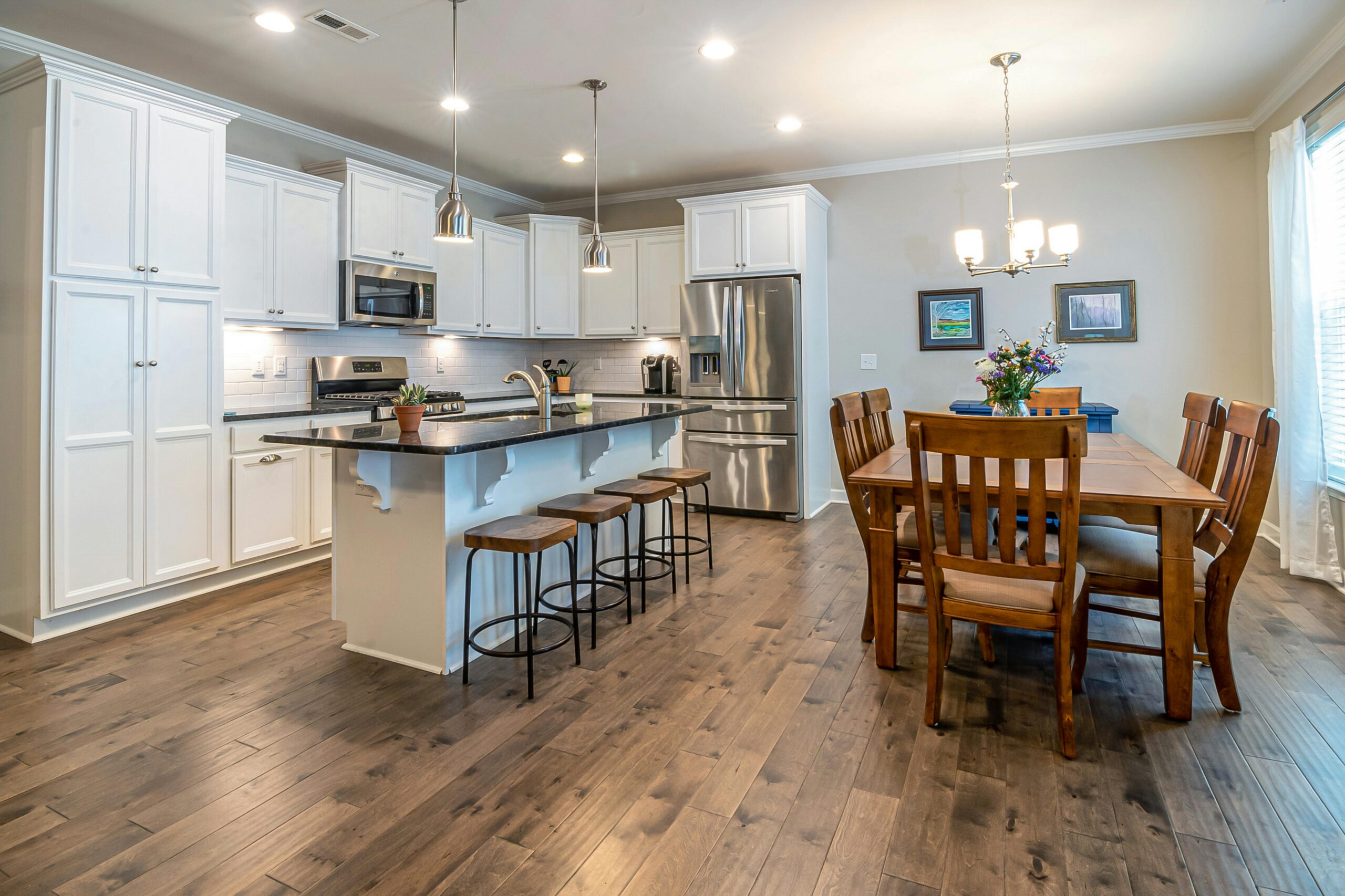
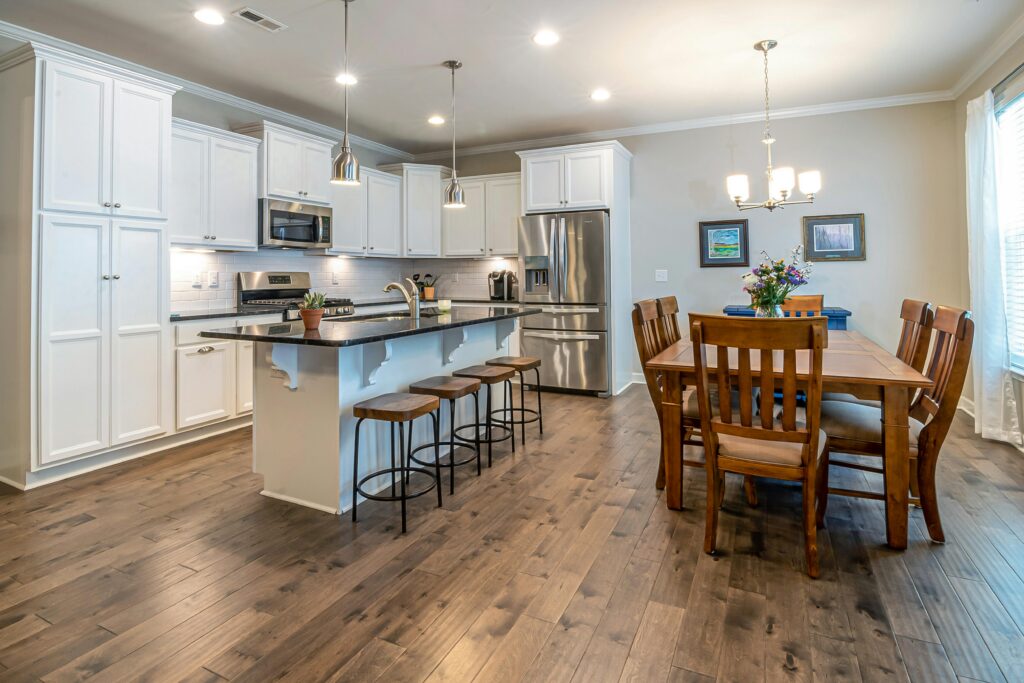
For example, you could combine recessed ceiling lights with pendant fixtures and under-cabinet lighting, a.k.a. toekick lighting, in the kitchen. Wall lights are a popular option for task lighting, since they can be positioned to illuminate specific countertop areas, and they’re quite stylish.
Wide Pathways and Doorways
A home that’s designed for aging in place leaves plenty of space for easy navigability. Squeezing through tight doorways and hallways gets harder with age, especially if they’re accompanied by a wheelchair or walker. So, you’ll want to make sure your doorways are not only sufficiently wide, but easy to open.
Wider walkways in general can also breathe more character into a space, whether your vibe is sleek or cozy and relaxing.
Feeling inspired by these upgrades? If so, the Debowsky Design Group is happy to help you make them happen. We understand the importance of prioritizing health and wellness without compromising on style and taste. So, give us a call when you’re ready to design a home that’s just as safe as it is aesthetically pleasing!