



…a house is not a home until you love where you live…

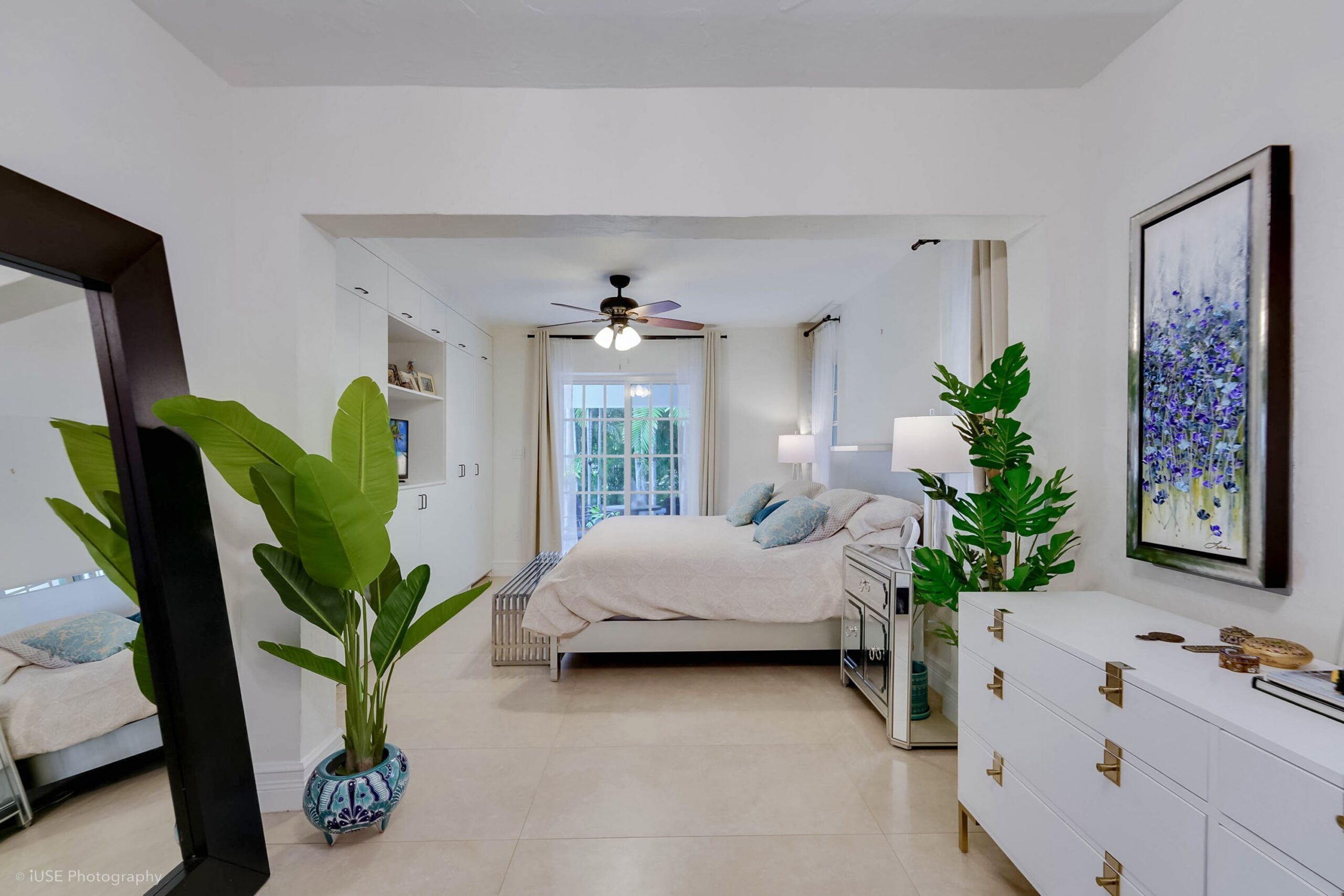
Why the Best Miami Homes Are Built Around How You Feel Inside Them
We’ve walked through homes that photograph beautifully and feel like nothing at all once you’re standing in them. Every surface had been considered, every fixture was clearly expensive and somehow, the whole space just sat there like a hotel suite: nice enough, forgettable within the hour, and not particularly interested in whether you’re comfortable or eager to linger a good long while in the space.
We’ve also walked through homes that are far more modest on paper and hit you in your feels the second you walk in. The light lands where it was intended to, the transition from one room to the next feels unhurried, the ceiling height was considered to the inch and something in your shoulders just relaxes without you even knowing what happened. But here, here you could stay a while.
That difference is that homes can be more than just a building with four walls. They can be spaces that truly breathe life – into the air around you and into yourself. They can make you feel something. Good, bad, eager, anxious, relaxed, stressed, welcome.
The best homes can be both beautiful and restorative. And it’s never an accident when they are.
Beautiful and Restorative Are Not the Same Design Problem
Beauty (a loose term), in a lot of residential design, is a visual consideration brought in through interiors. We think of it as finishes, proportions, lighting elements and tile selections, vanities and cabinet styles. All these choices matter greatly when designing a home, and we spend a significant amount of our own design process on them. In fact, it’s one of the more ‘fun’ phases of a project. But they’re solving for how a space looks to someone who isn’t living in it yet.
Restoration is a different design problem entirely, and it’s solved through experience rather than image. In this case, we’re talking about how a space behaves (yes, like it is a living organism because in a weird way, it is) on an ordinary Tuesday: whether the kitchen supports how your family cooks and gathers, whether the primary suite genuinely lets you recover at the end of a long day, whether the transition from a loud, bright living space into a quieter one happens gradually enough that your nervous system gets the message before you do (lamp-o-clock, anyone?).
A home can certainly be aesthetically stunning while completely missing the point of the second. That’s why we live by our slogan, “a house is not a home until you love where you live.” Because living is so much more than just being in a space.
The Design Decisions That Change How a Home Feels
Alright, here goes: Light does more emotional work than almost anything else in a home. Yes, soak that one in for a moment. Read it again. Alright, now let’s move on.
Light is also one of the most under-discussed elements in early design conversations. And we’re not just talking pendants and overhead lighting here, we’re talking incorporating natural light and seeing how it plays around each room at different points throughout the day and year. We want to consider where the morning light lands, how a space transitions from bright to soft as the day goes on, whether a primary suite gets gentle western light in the evening instead of harsh glare: these decisions get made (or missed) at the orientation and window-placement stage, long before anyone’s picking paint colors or backsplashes.
Next is sound. Yes, sound. And no, we’re not being hokey about this. Acoustic separation can get forgotten until it’s a daily irritation. Ever rented an apartment and found out too late that it’s so close to a train line or under the plane pathway to the airport? Yes, sound is a big consideration. An open, connected floor plan is wonderful for entertaining and miserable for the person trying to sleep while half the household is still up. Thoughtful buffers between active and quiet zones, sound-absorbing materials in the right places, and simply not putting a primary suite directly adjacent to the loudest room in the house are the unglamorous decisions that make a beautiful open home also a livable one.
Lifestyle is next. How a home unfolds as you move from the front door inward, whether the entry compresses before it opens into something larger, shapes how settled you feel the instant you’re inside. A home that dumps you directly into the busiest room the second the door opens asks something different of you than one that lets you arrive gradually. A home that is set up for how you live within those arrivals is also key. Do you enter primarily through the garage? Is there a place for the kids to leave their sports equipment, do you have a mudroom that is tucked away for an easy transition space?
Of course, views and sightlines change the emotional temperature of a room. A primary suite oriented toward a private, green view feels different from an identical room facing a neighbor’s driveway, even if every single material in both rooms is the exact same. We spend real time during design considering what you’ll see from where you’ll actually be, which is a different exercise than making sure a room looks good from the doorway or on paper.
As far as material selections go – material warmth is often the missing ingredient in homes that read as beautiful but feel a little cold. Natural materials, warmer tones, and tactile surfaces (wood, stone with texture, softer light sources) tend to feel more inviting and restorative than an all-white, all-hard-surface aesthetic, even when the latter has a propensity to photograph more dramatically.
Why The Idea of Designing For Living Gets Missed So Often
A lot of design conversations start with the wrong question. “What do you want it to look like” is the question that produces a magazine-ready home. “How do you want to feel when you’re standing here at the end of a hard day” is the question that leads to a home where you want to live. And yes, of course both questions matter. But it’s important to know where you want to go at the end of the day and how you want to feel inside your space.
How We Design for This
When we start a project, we spend real time asking clients about their actual daily rhythm rather than jumping straight to layouts and finishes. When do you wake up, how do you use your space. Where do you end up at the end of a long day, and what do you want that space to do for you. Do you decompress alone or with people around. Those answers shape orientation, room adjacency, and material choices.
It’s a slower way to start a project than pulling up a Pinterest board and picking materials. It’s also the difference between a home that photographs well and one that does something for the people living in it every single day.
FAQ
Can a home be both beautiful and restorative, or is there always a trade-off?
There’s no inherent trade-off. The homes we’re proudest of achieve both, but it requires designing for feeling from the beginning rather than treating it as something that happens automatically once the finishes are beautiful enough. It’s a matter of asking different questions early, not spending more money.
What’s the biggest mistake people make when trying to design a calming home?
Focusing entirely on aesthetics, like a neutral palette or spa-inspired finishes, while ignoring the structural and spatial decisions that create calm: light, acoustic separation, sightlines, and the sequence of moving through the home. A neutral color palette in a poorly zoned, acoustically harsh layout won’t feel restorative no matter how soothing the paint color is.
Does this kind of design cost more than a standard renovation?
Not necessarily. Many of the decisions that make the biggest difference, like window orientation, room adjacency, and where quiet zones sit relative to active ones, are about planning rather than added expense. The cost impact depends more on the specific choices made than on designing with feeling in mind as a starting principle.
How do you design for how a home feels when every family is different?
By asking, rather than assuming. Every family has its own daily rhythm, its own relationship to noise and light, its own idea of what “restful” looks like in practice. We spend real time in early conversations understanding that rhythm before any layout decisions get made, because a restorative home for one family looks different than a restorative home for another.